
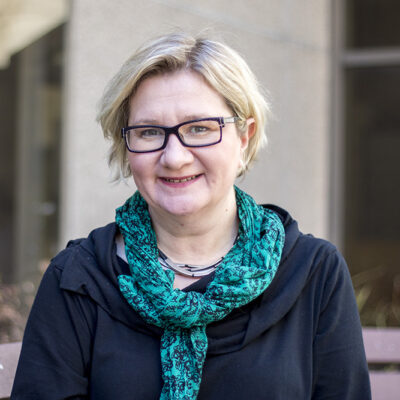
Miljana Horvat
Professor, Associate Dean for Graduate and Postdoctoral Studies at the Faculty of Engineering and Architectural Science, Toronto Metropolitan University
Sector: Public Sector
Discipline: Education
Year: 2026
What are the major milestones in your career?
In 2015, being appointed inagural Associate Dean for Graduate and Postdoctoral stuides at the Faculty of Engineering and Architectural Science (FEAS) and the very first woman in any of the upper academic administration positions at FEAS since its existance. In 2022 being promoted to Full Professor. In 2007 being the first female faculty member to win Natural Sciences and Engineering Council of Canada Discovery Grant at the Department of Architectural Science. In 2004 being hired as an Assictant Professor at TMU (then Ryerson University). In 1995 immigrating to Canada as a young architect.
Who were your major influencers/mentors and what were the key lessons you gained from them?
I did not have one specific mentor in the traditional sense. Instead, I have been fortunate to learn from many people throughout my academic and professional journey: some who inspired me through their generosity, integrity, courage, and vision, and others who taught me, indirectly, what kind of leader, colleague, or mentor I did not want to become. Both kinds of lessons have been valuable. I think this happened partly because my career path has crossed disciplines, institutions, countries, and professional cultures. In those spaces, mentorship was not always formal or clearly defined. I often had to observe carefully, learn by doing, and draw lessons from the people and situations around me. Some individuals showed me the power of opening doors for others, sharing knowledge generously, and leading with both confidence and humility. Others showed me how damaging it can be when people use authority without care, fail to listen, or forget the human dimension of academic and professional life. Both kinds of lessons have stayed with me. They taught me that mentorship is not only about giving advice; it is also about creating conditions in which others can grow, feel seen, and develop confidence in their own abilities. Over time, I learned the importance of listening carefully, acting with fairness, making room for others, and using whatever influence we have to support people who may not always know how to advocate for themselves.